
What this supports
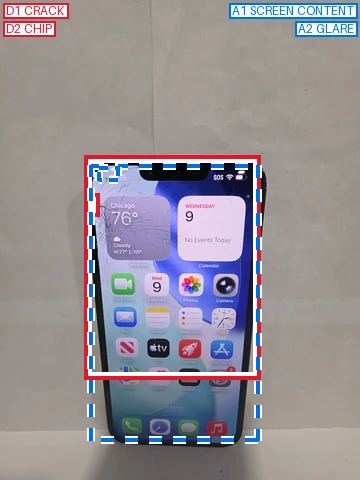
The recorded canonical result supports a damaged-screen outcome for this view and identifies crack and chip.
RECORDED CASE 12 / CRACK AND CHIP
A broad top crack and smaller upper-left chip are recorded in one lit view.
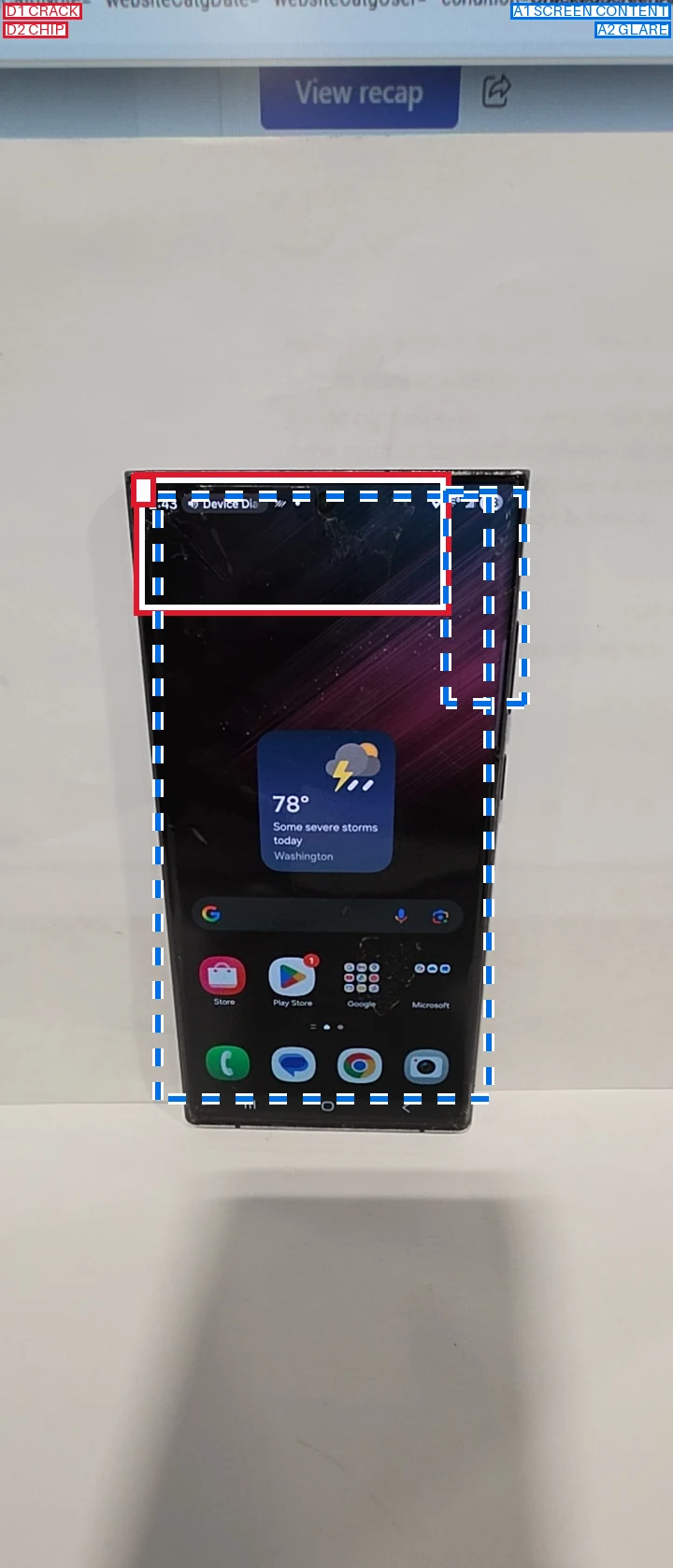
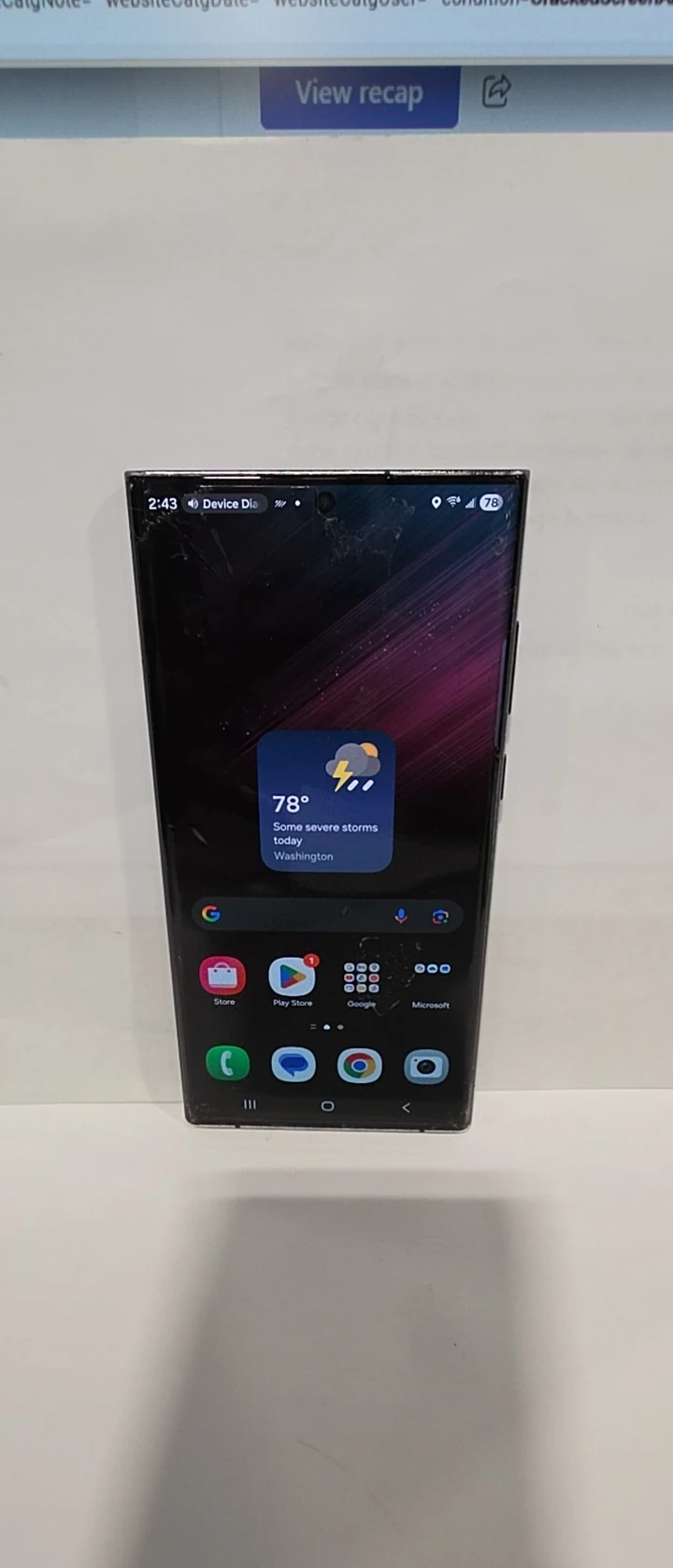
Image unavailable. The recorded findings are listed below.
The damaged outcome resolved, but the exact finding inventory differed between model roles. The recorded canonical annotation is not human-verified ground truth.
Recorded VisionX inspection. The source photograph was auto-oriented, metadata-stripped, and resized for web only. Recorded canonical findings were re-rendered with thicker web-only boundaries for readability; their geometry was not expanded or repaired. Results apply only to the photographed view and are not accuracy benchmarks, functional tests, or whole-device guarantees.
Recorded VisionX inspection. The source photograph was auto-oriented, metadata-stripped, and resized for web only. Recorded canonical findings were re-rendered with thicker web-only boundaries for readability; their geometry was not expanded or repaired. Results apply only to the photographed view and are not accuracy benchmarks, functional tests, or whole-device guarantees.
CANONICAL DAMAGE FINDINGS
CAPTURE ARTIFACTS
The recorded canonical result supports a damaged-screen outcome for this view and identifies crack and chip.
The exact inventory is disputed, and the image cannot determine whether the two findings share a cause.
Separate labels preserve different damage types even when they appear in one view.
RELATED / SAME CATEGORY
These recorded cases are linked by finding category, not by customer or workflow provenance.
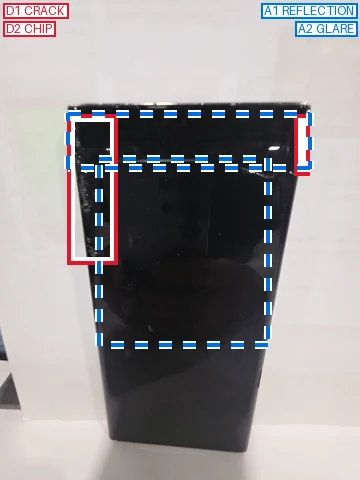 Recorded Case 11
Crack and chip
The recorded result preserves the crack and chip as separate canonical findings.
Recorded inventory · Consensus not applicable
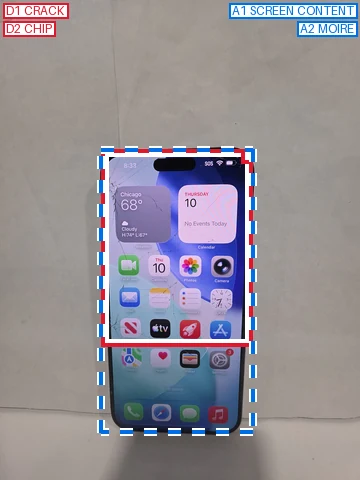 Recorded Case 13
Crack and chip
This record keeps the glass findings distinct from screen content and moiré artifacts.
Exact finding inventory disputed
 Recorded Case 14
Crack and chip
The overlay makes the two recorded boundaries inspectable without merging their labels.
Exact finding inventory disputed
THE NEXT STEP
Bring representative photographs and your decision rules to a scoped VisionX evaluation.